



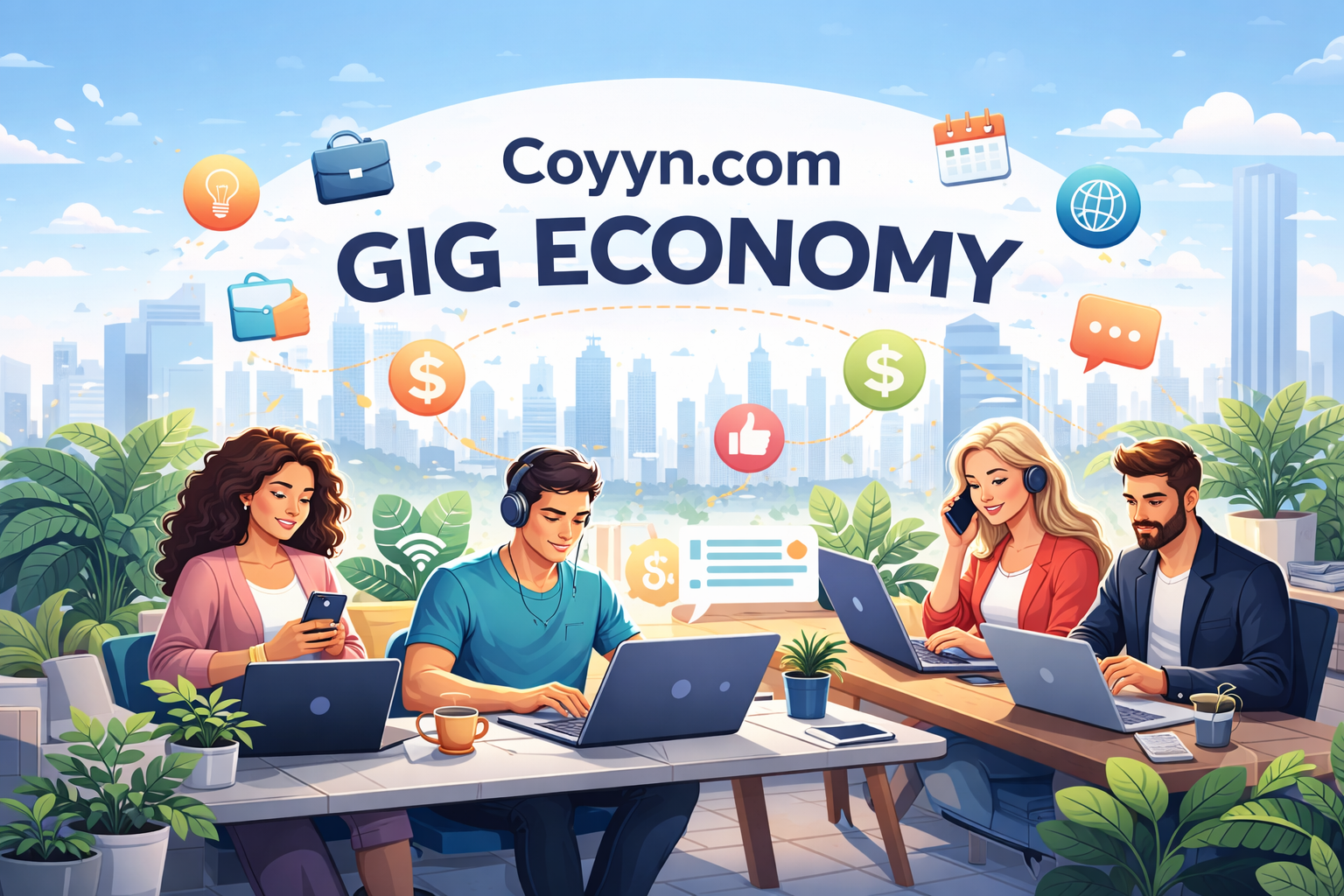
The coyyn.com gig economy represents how work is evolving in a digital-first world. More professionals are choosing freelancing, remote work, and flexible jobs over traditional office roles. This shift is driven by technology, global connectivity, and the demand for specialized skills. The gig economy allows independent contractors to work on their own terms, choose projects, and collaborate with clients worldwide using digital platforms that make online work more accessible and efficient than ever before. Learn how the coyyn.com gig economy is changing freelancing, remote work, and flexible jobs, and what it means for independent contractors and online work today.
How the Gig Economy Is Changing Freelancing
The gig economy has transformed freelancing from a side option into a serious career path. Instead of relying on a single employer, professionals now build careers through multiple projects and long-term client relationships. The coyyn.com gig economy highlights this change by focusing on skill-based work, flexibility, and digital collaboration. Writers, designers, developers, and consultants are increasingly choosing this model because it offers freedom, variety, and better control over income and work-life balance.
Why Coyyn.com Gig Economy Matters Today
The coyyn.com gig economy is relevant because it reflects real changes in how businesses and workers connect. Companies want quick access to skilled professionals, and freelancers want reliable systems that support fair opportunities. This approach supports both sides by encouraging efficient workflows and clear communication. As remote work becomes more common, platforms and ecosystems built around gig work play a key role in shaping the future of digital employment.
Opportunities for Freelancers and Independent Contractors
For freelancers, the coyyn.com gig economy opens the door to broader opportunities and career flexibility. Instead of waiting for promotions or fixed roles, professionals can choose projects that match their skills and goals. This model encourages continuous learning, personal branding, and multiple income streams. Whether someone is new to freelancing or already experienced, the gig economy provides a practical way to grow a career through consistent and skill-focused online work.
Why Businesses Are Adopting Gig-Based Work Models
Businesses are increasingly turning to gig workers to stay competitive and adaptable. The coyyn.com gig economy fits this need by supporting project-based hiring and access to specialized talent. Companies can reduce costs, speed up delivery, and scale teams based on real demands. This model is especially useful for startups and growing businesses that need flexibility without the long-term commitments of traditional employment structures.
The Role of Digital Platforms in the Gig Economy
Digital platforms are the foundation of the modern gig economy, and the coyyn.com gig economy reflects this clearly. These platforms make it easier to find work, communicate with clients, manage projects, and deliver results from anywhere in the world. Tools for collaboration, task management, and payments have turned freelancing into a more organized and reliable way to work, supporting the continued growth of remote and flexible jobs.
Challenges Freelancers Need to Understand
While the coyyn.com gig economy offers freedom and flexibility, it also comes with challenges. Income can be inconsistent, competition can be strong, and freelancers must manage their own schedules, finances, and professional development. Success in the gig economy requires discipline, planning, and strong communication skills. Understanding these realities helps independent contractors build more stable careers instead of relying only on short-term or unpredictable projects.
Building a Sustainable Career in the Gig Economy
Long-term success in the coyyn.com gig economy depends on more than just finding work. Freelancers need to focus on improving skills, building a strong reputation, and maintaining good client relationships. Creating a solid portfolio and delivering consistent quality helps attract better opportunities over time. Treating freelancing like a business, rather than just temporary work, is key to achieving stability and growth in the competitive online work market.
The Future of Coyyn.com Gig Economy and Online Work
The future of work is becoming more flexible, digital, and skill-driven. The coyyn.com gig economy reflects this direction by supporting independence, technology, and global collaboration. As more industries adopt freelance and remote work models, the gig economy will continue to expand. Professionals who adapt to these changes and invest in their skills will be better positioned to succeed in the evolving world of digital and flexible jobs.
Read More: Console EuroGamersOnline: The Ultimate Hub for Console Gaming Fans
FAQs:
What is the coyyn.com gig economy?
The coyyn.com gig economy refers to a modern approach to gig-based work that focuses on freelancing, remote work, and project-based jobs supported by digital platforms. It reflects how professionals and businesses connect in today’s flexible and online-driven work environment.
How does the gig economy benefit freelancers?
The gig economy gives freelancers more control over their schedules, projects, and career paths. It allows independent contractors to work with global clients, build multiple income streams, and grow their skills through diverse online work opportunities.
Why are businesses using gig workers more often?
Businesses use gig workers to access specialized skills, reduce costs, and stay flexible. The gig economy allows companies to hire talent for specific projects without long-term commitments, making it easier to adapt to changing market needs.
Is the gig economy a reliable long-term career option?
Yes, the gig economy can be a reliable career path if freelancers focus on skill development, reputation, and client relationships. Treating freelancing as a business helps create more stability and long-term growth.
How does technology support the gig economy?
Technology supports the gig economy by providing digital platforms for finding work, managing projects, communicating with clients, and delivering services. These tools make remote work and online collaboration easier and more efficient.