


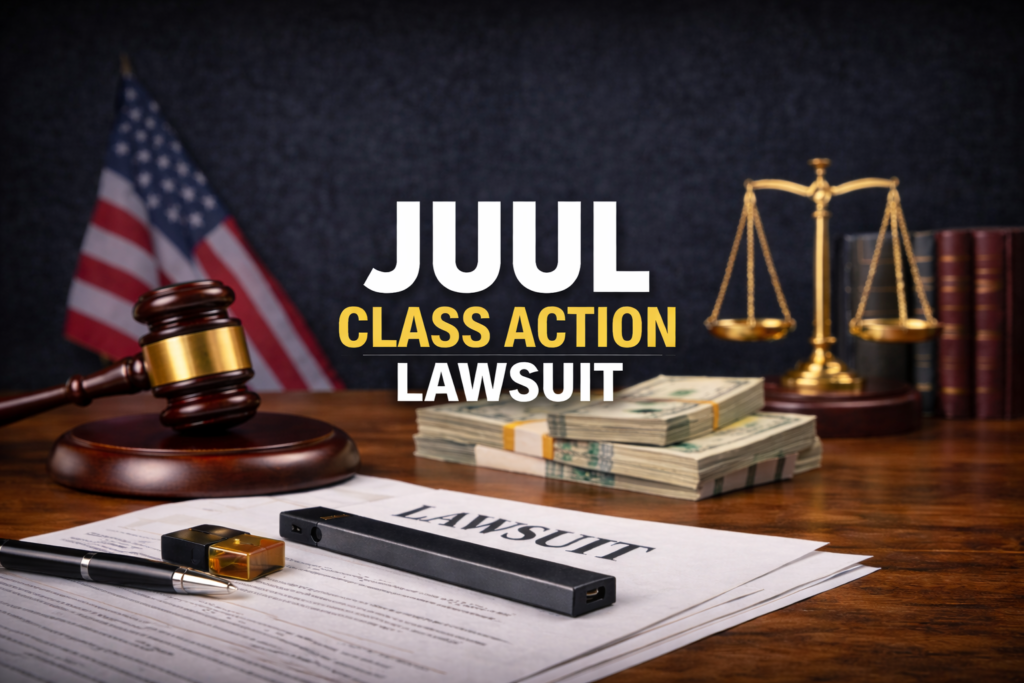
The juul class action lawsuit is one of the most significant legal cases involving the vaping industry in the United States. As Juul products became widely used, concerns grew about how they were marketed and whether consumers were properly informed about nicotine strength and addiction risks. This lawsuit drew national attention to consumer protection laws, youth vaping concerns, and corporate responsibility, making it a key topic for former Juul users and the general public. Learn about the juul class action lawsuit, including claims, settlement details, eligibility rules, and what affected consumers should know.
What Is the Juul Class Action Lawsuit
The juul class action lawsuit is a consumer-focused legal case that allowed thousands of Juul buyers to pursue compensation together. Instead of filing individual claims, consumers joined a single action alleging misleading marketing and unfair business practices. The lawsuit focused on economic harm, arguing that buyers paid for Juul products without fully understanding the level of nicotine exposure or the potential for addiction associated with regular use.
Why Juul Labs Was Sued
Juul Labs was sued because consumers believed the company failed to clearly disclose how addictive its vaping products were. Many users assumed Juul devices were a safer alternative to smoking without realizing they delivered high concentrations of nicotine. The lawsuit also addressed concerns that Juul’s advertising style, flavors, and product design appealed to younger audiences, which intensified scrutiny from regulators and public health officials.
Claims Made Against Juul Labs
The juul class action lawsuit included claims of deceptive advertising, consumer fraud, and unfair business practices. Plaintiffs argued Juul minimized nicotine addiction risks while promoting a modern and clean brand image. Consumers stated they would have made different purchasing decisions if marketing had been more transparent. These claims were limited to financial losses and did not involve personal injury or medical damage allegations.
Who Was Eligible for the Settlement
Eligibility for the juul class action lawsuit settlement depended primarily on purchase history. Consumers who bought Juul devices, pods, or starter kits in the United States during the qualifying period were eligible to file claims. Proof of purchase increased potential compensation, but consumers without receipts could still participate under capped limits. Eligibility was not dependent on age at the time of purchase.
Who Was Excluded From the Class Action
Certain individuals were excluded from the settlement. Juul employees, company affiliates, and those who purchased products for resale were not eligible. Consumers who opted out of the class action or filed separate lawsuits were also excluded. Additionally, individuals seeking compensation for health-related injuries were required to pursue individual vaping lawsuits rather than the consumer class action settlement.
Settlement Overview and Compensation
The juul class action lawsuit settlement required Juul Labs to pay hundreds of millions of dollars to resolve consumer claims. Compensation amounts varied based on spending history and documentation. Some consumers received modest payments, while others received higher amounts depending on verified purchases. The settlement was reached without Juul admitting wrongdoing and was designed to reimburse consumers for economic losses.
Claims Process and Deadlines
The claims process required consumers to submit forms through an official settlement administrator by a strict deadline. Claims were reviewed and verified before approval. Payments were distributed only after final court approval and administrative processing. Consumers who missed the deadline generally lost eligibility, as courts rarely allow late claims once a settlement becomes final.
Impact on the Vaping Industry
The juul class action lawsuit had a lasting impact on the vaping industry. Many e-cigarette companies changed their marketing strategies, reduced flavor offerings, and increased warning labels. Regulatory oversight expanded at both state and federal levels. The case became a turning point, emphasizing transparency, consumer awareness, and accountability across the vaping and e-cigarette market.
What Consumers Should Know Going Forward
The juul class action lawsuit highlights the importance of understanding product information before purchasing items involving nicotine or health risks. Consumers should stay informed about vaping regulations, read product disclosures carefully, and understand their rights under consumer protection laws. Legal actions like this help shape safer marketing practices and encourage companies to provide clearer information to buyers.
Read More: Celsius Lawsuit: What Went Wrong and What It Means for Investors
FAQs:
What was the juul class action lawsuit about
The juul class action lawsuit focused on claims that Juul Labs used misleading marketing and failed to clearly disclose the addictive nature of its nicotine products, causing financial harm to consumers.
Who qualified for the juul class action lawsuit settlement
Consumers who purchased Juul products in the United States during the qualifying time period and met settlement requirements were eligible to file claims, even without proof of purchase in some cases.
Is the juul class action lawsuit still active
Most consumer claims have been resolved, and the settlement process is largely complete, although other Juul-related lawsuits may still exist separately.
How much money did consumers receive from the settlement
Compensation varied depending on purchase history, documentation, and the total number of approved claims, with some consumers receiving higher payments than others.
Can I still sue Juul Labs individually
That depends on your situation. The consumer class action covered financial claims, while personal injury or health-related claims may require individual legal action.